
Welcome to The Fertility Centre
About Us
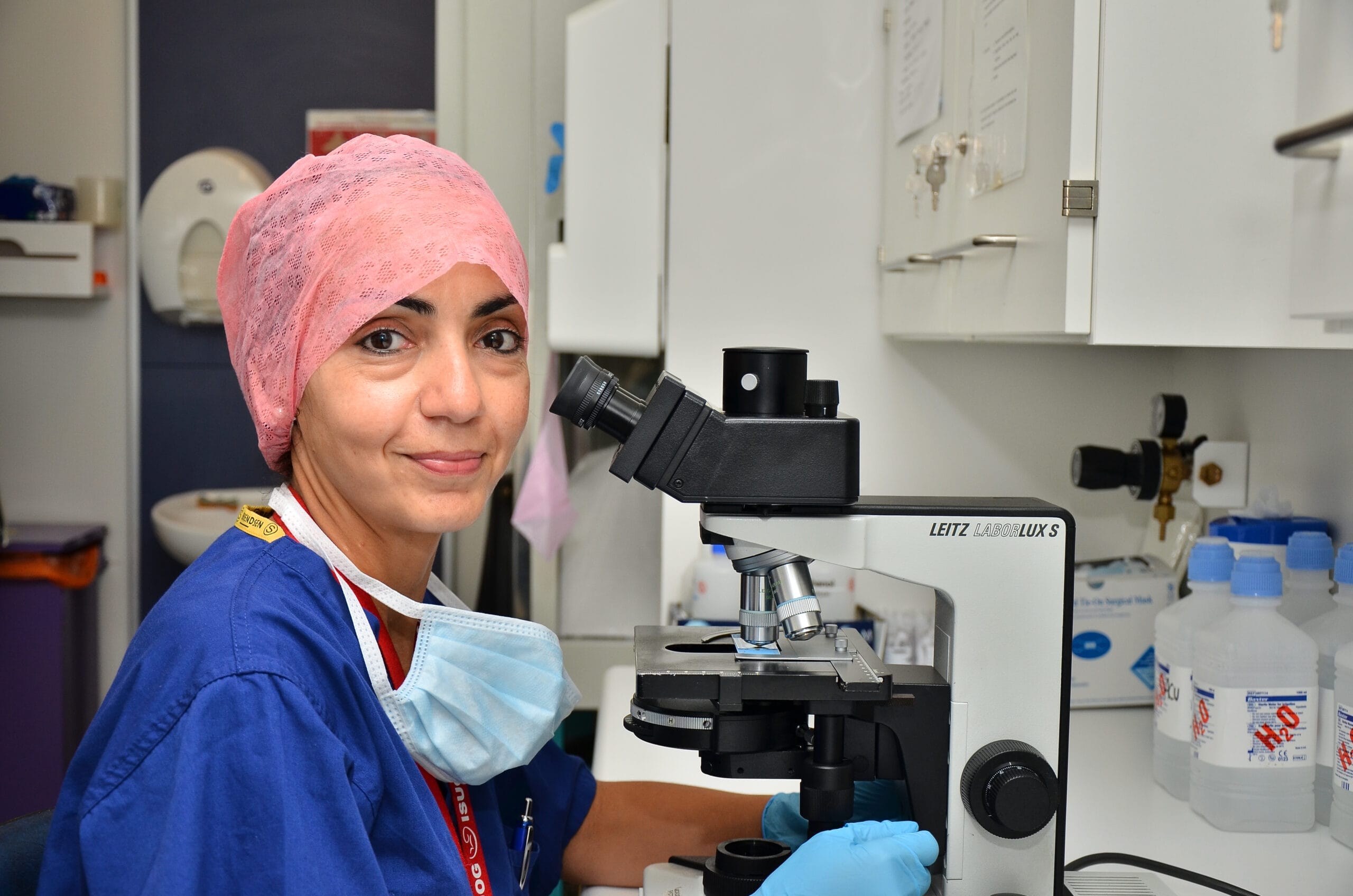
The Fertility Centre (formerly the Assisted Conception Unit) was established at Chelsea and Westminster Hospital in 1995 and is widely recognised as a centre of excellence for fertility care in London.
In 2020 we established a new satellite service at West Middlesex University Hospital, building upon the longstanding success and reputation of our services at Chelsea and Westminster Hospital. The new service extends patient choice and convenient access to fertility care across West London, and in early 2021 we formally established The Fertility Centre as our new name and identity.
Fertility problems can affect one in seven couples and these days there are a number of options available when considering fertility testing and treatment. Our staff are experts in this highly specialised field and we oversee more than 600 fresh and 200 frozen cycles per year (hfea.gov.uk).

We provide a genuinely holistic and multidisciplinary approach for our patients. We investigate properly, analyse the factors involved and the overall prognosis, review the whole range of available treatments and we offer safe and sound advice. We form a partnership with each patient or couple.
Both Chelsea and Westminster Hospital and West Middlesex University Hospital are teaching hospitals aligned to Imperial College School of Medicine. Our active research programmes ensure that our fertility treatments are based on the most current scientific evidence. We generate knowledge and we are the first to apply it in our clinical practice.
In addition to our clinical expertise and range of treatment options, we understand the inevitable stress and anxiety of fertility treatment. Our team is committed to supporting you every step of the way throughout your treatment.
As an integral part of our NHS Trust’s hospitals, we are able to provide all our fertility patients with access to additional services and continuity of care that may be required – such as gynaecology and maternity.
We are proud to say that we strive at all times to care for our patients with fairness and kindness and strictly within all regulatory guidelines. For self-funded patients we aim to price our services competitively and ethically.
We thoroughly enjoy our work. Our patients are extremely loyal to us and we feel the same towards them.
We provide a broad-based and comprehensive range of fertility services for our patients – but our areas of particular expertise include the following
- Our consultants are experts in the management of women over age 40 seeking fertility treatment.
- Our consultants have expertise in conception for younger women with premature ovarian ageing and we lead the field in the area of ovarian reserve assessment (having introduced early ovarian ageing as a clinical entity). Our consultants have authored books on fertility for women in their late 30s and in their 40s.
- We provide a comprehensive surgery service as a treatment for conditions that may interfere with conception - such as endometriosis, fibroids, repairing damaged fallopian tubes or removal of scar tissue (adhesions) in the womb or abdominal cavity.
- As part of a leading London NHS Trust, we offer integrated care with the Early Pregnancy Unit, the Emergency Gynaecology Unit, Accident and Emergency and Obstetric Units. We look after our patients throughout their fertility journey and can deal with any problems or complications that may arise.
- We are the UK’s main centre for the management of infertility in couples with blood-borne viral infections such as HIV or Hepatitis B or C.
- We offer patient support groups and counselling with a BICA trained counsellor.
About Our Fertility Treatments and Services
We believe in treating all patients who have a reasonable chance of fertility success.
Forms, price list and resources
Form downloads
Please make sure you read, print and sign your forms, then bring them to your appointments. Our specialists will be able to answer any questions when you meet with them.
We have prepared this library of resources to help you during your journey.
Please note: additional forms may need to be completed at the appointment for donor gametes, HIV positive patients and other specialist areas.
All consent forms (including HFEA) will now be issued electronically following your doctor consultation. Please read through the Patient Information Leaflet in preparation for your nurse consultation.
We are proud to be a HFEA licensed clinic since 2004 and CQC regulated hospital.
Video resources
In order to be eligible for fertility treatment at The Fertility Centre, you must fulfil the following criteria:
- The female partner must be less than 46-years-old by the time that treatment is carried out
- The female partner should have a Body Mass Index (BMI) of less than 35kg/m2
- A ‘Welfare of the Child’ assessment must be carried out
When it comes to being referred for and paying for fertility treatment, there are two options:
- You may be eligible for referral and funding from the NHS
- You can choose to self-fund your treatment and self-refer
You may be eligible for NHS treatment at The Fertility Centre. Your local Clinical Commissioning Group (CCG) will have certain criteria that you and your partner will have to meet to receive NHS-funded treatment.
Please contact your local CCG directly as these criteria do vary. You will find your local CCG at www.nhs.uk, and more information can be found on http://www.fertilityfairness.co.uk or by email at info@infertilitynetworkuk.com.
If you meet your local CCG eligibility requirements, your GP can refer you to the sub-fertility clinic at Chelsea and Westminster Hospital or at West Middlesex University Hospital through the NHS e-Referral Service (ERS).
After your GP has referred you to the clinic, you will complete a number of fertility investigations to review your eligibility for treatment as an NHS patient with The Fertility Centre.
If you are not eligible for NHS-funded treatment or prefer your treatment to begin before any NHS waiting list time allows, you can choose the self- funded treatment option.
In this case, you may choose to self-refer as a self-funded patient for an initial consultation with one of our experienced consultants–but please note that you will still need to meet the general eligibility requirements in all cases.
Non-UK based couples seeking fertility treatment at The Fertility Centre can arrange for treatment on a self-funded basis. Please arrange a private consultation with the consultant a week before the onset of the woman’s period. This will enable us to look towards starting a treatment cycle once the initial investigations and testing has been carried out.
View our current price list here, and find out more about our International Patients service.
Before Beginning Treatments
Fertility treatment has no guarantee of success, and the decision to embark on treatment is a personal one. You should carefully consider the risks and the chances of success that our expert staff will discuss with you at consultation.
Initial Consultation
Before you can begin any form of treatment at The Fertility Centre, you will require an initial consultation. At this visit, one of our fertility specialists will review your medical history, ensure that all the necessary investigations have been completed and advise you about the best treatment option for you. Some couples are referred by their GP and baseline investigations are arranged before their first visit to the Centre. If these have been undertaken elsewhere previously, please ensure that you bring any results with you.
Baseline Investigations
Baseline investigations that must have been carried out before the treatment starts include:
Evidence and Success Rates
The success of a fertility clinic is determined not only by its pregnancy rate but also by the patient experience throughout treatment.
Pelvic Ultrasound Scan
This identifies any abnormalities in the uterus or ovaries. It should be carried out between the second and fifth day of the patient's monthly menstrual cycle as this is the best time to visualise the ovaries and check the lining of the womb.
Hormone Profile and Viral Screen
A blood test is carried out on the same day as the pelvic ultrasound scan to check blood count, hormone levels as well as a viral screen.
Semen Analysis
A semen analysis evaluates the health and viability of the sperm; this measures the number of sperm, the shape of the sperm and the movement of the sperm.
Treatments
This treatment option can be appropriate for patients who have an irregular cycle and do not produce an egg each month. Provided the semen analysis is normal and the fallopian tubes are open, we generally advise ovulation induction as first line of treatment.
This involves taking a simple fertility drug called Clomifene (Clomid) for five days from day 2 of the cycle and we arrange an ultrasound scan 'follicle tracking' from day 8 or 9 of the cycle to check the ovaries are responding to the drug and producing a follicle.
We then advise timed intercourse. When there is no response to Clomifene or if conception has not occurred after a couple of cycles, we recommend treatment with injectable fertility drugs called Gonadotrophins.
These drugs are more potent than Clomifene and require close ultrasound scan monitoring every cycle, as the risks of a multiple pregnancy are much higher.
If you are significantly overweight or underweight you are unlikely to respond well to ovulation induction treatment (or any fertility treatment). Your doctor will check your Body Mass Index and may recommend deferring treatment.
This treatment involves the insertion of prepared sperm from either the partner or a donor into the womb at the most fertile time of the monthly cycle.
Insemination using sperm from the partner can be appropriate when there is unexplained infertility or difficulties with intercourse.
The treatment may be carried out with or without the use of fertility drugs, depending on your circumstances. Ultrasound scan 'follicle tracking' is used from day 8 or 9 of the menstrual cycle to time insemination accurately.
In this treatment, eggs are removed from the ovaries, fertilised with sperm in a laboratory dish and allowed to grow before replacing in the womb. IVF can be appropriate in the following circumstances:
• If damaged or blocked fallopian tubes stop sperm from reaching the egg
• If sub-optimal sperm quantity or quality reduces the chance of fertilisation
• If there is unexplained fertility or resistance to conventional ovulation induction techniques
In the unlikely event of failure of the Centre (such as staffing issues, or equipment failure), we may require to transfer patients to another local IVF centre for on-going care. A Third Party Agreement is in place with Hammersmith IVF Unit so as to cover such eventualities.
ICSI involves injecting a single sperm directly into an egg in order to fertilise it. The fertilised egg is then transferred to the womb. It can be a suitable treatment when sperm quantity or quality is poor such that conventional IVF would lead to low or no fertilisation. The treatment protocols, egg collection and embryo transfer techniques are the same as for IVF.
The only difference occurs in the laboratory after egg collection when, rather than allowing the egg and sperm to interact in the dish, a single sperm is injected into the centre of each egg using a micro-injection needle.
Egg freezing is an increasingly common treatment. There are 2 main reasons why a person may choose to freeze their eggs:
- They are due to undergo treatment which may affect the ovarian reserve or fertility (for example cancer treatment such as chemo- or radio- therapy, gynaecological surgery, or gender identity treatment). We have facilities to freeze eggs at short notice should this be necessary.
- When someone is not ready to have a pregnancy and wishes to freeze eggs to increase their chances of pregnancy in the future.
The egg freezing process involves injections to stimulate the ovaries over a period of approximately 2 weeks. This is then followed by an egg collection procedure and freezing of the mature eggs. Frozen eggs can then be thawed and used in an IVF/ICSI cycle in the future.
Embryo freezing may be undertaken electively for social reasons or as part of a planned fresh IVF/ICSI cycle. In a fresh IVF cycle, when there are several embryos of good quality, it is generally recommended to freeze embryos which are not used. These embryos can be used at a later date should the original cycle not be successful or should there be a live birth and the couple want to have another child. Sometimes we recommend not going ahead with a fresh embryo transfer and advise freezing all the embryos, for example if there are concerns regarding your risk of Ovarian Hyperstimulation Syndrome (OHSS) or problems have been identified with the womb lining.
The process of Frozen Embryo Transfer (FET) is much easier (and less costly) than a fresh cycle. Usually we monitor the menstrual cycle with ultrasound. When the stage is reached at which a naturally occurring embryo would be ready to implant, we defrost the embryos for a transfer similar to that for an IVF cycle. Unfortunately, not all embryos survive the freeze/thaw process, but since the newer freezing technique of vitrification has been used, embryo survival after thaw is above 80%.
For single women, female couples and people who wish to conceive with donor sperm we provide a number of treatment options including donor intrauterine insemination or IVF. We have links with a number of UK and international sperm banks from where you can select a donor. Please make an appointment with one of our consultants who will make a full assessment and advise which treatment may be most appropriate.
We see both NHS and private referrals for fertility preservation for transgender and non-binary people. This may involve freezing sperm, eggs or embryos. NHS patients can be referred by their GP or gender clinic and private patients can self-refer by contacting us directly.
This service has been developed for couples who wish to have a child but where the male partner is HIV positive and the female partner is HIV negative (referred to as HIV-discordant status).
The aim of the treatment is to reduce the risk of HIV transmission by attempting to achieve conception through insemination of sperm that has been washed free of HIV rather than through unprotected intercourse. We were the first clinic in the UK able to offer sperm washing to couples. There are more than 25 clinics worldwide now offering the treatment. The combined results from all these clinics indicates that in more than 5,000 inseminations or other fertility treatments carried out using washed sperm (prepared according to published guidelines), there have been no reported cases of HIV transmission to the female partner or to the resulting child.
Some patients have no sperm in their ejaculate because it has been intentionally blocked by surgery (vasectomy), blocked by infection, or congenitally blocked. It is commonly possible to obtain sperm in these situations which can be used for an ICSI cycle. The procedure is usually performed under anaesthetic in advance of any egg collection. The sperm are then frozen and stored for future use. The Fertility Centre offers both NHS and private andrology services for male or sperm-related fertility issues. Please contact us for further information.
The shape of the sperm (morphology) is important in diagnosing male or sperm-related fertility problems and in predicting fertilisation and pregnancy outcomes. Studies have shown that selecting better-shaped sperm improves your chances of a successful clinical outcome.
IMSI (Intracytoplasmic Morphologically Selected Sperm Injection) is a variation of ICSI that uses a higher-powered microscope to select sperm. Normally, the ICSI technique is performed with a 200x-400x light microscope. IMSI requires a latest generation light microscope (enhanced by digital imaging) with a magnification of up to 2700x. This allows the embryologist to detect subtle structural alterations in sperm and select spermatozoa with the most normally shaped nuclei (which contain the sperm's genetic material).
IMSI may be recommended to those patients who have had failed IVF/ICSI cycles in the past, or for couples who have a component of male infertility (especially in cases when patients present a high percentage of morphological anomalies in their sperm).
Although initial studies showed that IMSI is associated with an increased pregnancy rate in couples with repeated implantation failure, there is little evidence from randomised controlled trials to support better livebirth rates. This technique will only be offered when your doctor deems it appropriate for your treatment.
For further information and evidence including independent reviews please visit the governing body Human Fertilisation & Embryology Authority (HFEA) website on https://www.hfea.gov.uk/treatments/treatment-add-ons/: this technique has currently been deemed as grey in the HFEA traffic-light system for additional treatment options.
During IVF and ICSI fertility treatment a fertilised embryo will be transferred into the patient's uterus. The aim of the treatment is that the embryo will successfully implant itself into the lining of the uterus where it will grow and develop. However, sometimes the embryo does not implant and the fertility treatment cycle is unsuccessful.
EmbryoGlue® is a medium developed to closely resemble the environment in the uterus at the time of implantation. It is not a glue in the common sense but acts as an adhesive by increasing the chance of implantation of the embryo to the uterus. The embryos are placed in the solution and allowed to soak in it for a fixed period prior to the transfer. There is some evidence that suggests that the presence of hyaluronan in the transfer medium has a positive effect on clinical pregnancy rates and livebirth rates for both Day 3 and 5 (blastocyst) transfers. This technique has been reported to be advantageous for a selected category of patients, in particular those with previously failed implantation. EmbryoGlue® may also reduce the miscarriage rate. However, further studies of adherence compounds with embryo transfer need to be undertaken.
It is important for you to make an informed decision on what option is right for you. For further information and evidence including independent reviews please visit the governing body Human Fertilisation & Embryology Authority (HFEA) website: https://www.hfea.gov.uk/treatments/treatment-add-ons/
This technique has currently been deemed as amber in the HFEA traffic-light system for additional treatment options.
An egg is surrounded by a shell which is still present in the early embryo. To implant in the womb, the embryo must break through this outer coat – a process known as hatching. It has been suggested that sometimes hatching fails to occur which may provide an explanation, at least in part, as to why some couples fail to achieve a pregnancy.
Assisted hatching is a procedure that involves a hole being made in the shell of the developing embryo, generated from either an IVF or ICSI treatment, to aid the natural process of hatching. This is performed on either Day 3 or Day 5 following egg collection approximately 30 minutes before the embryos are transferred.
This technique has been reported to be advantageous for a selected category of patients, such as:
- those with advanced maternal age (>38 years)
- those with repeated failed treatment cycles despite good embryo quality
- those having a frozen-thawed embryo transfer cycle
Current literature has reported some evidence of increased rates of clinical pregnancy following this procedure in the above groups, however, more randomised controlled trials are needed to find out whether AZH can have an effect on live birth rates and to examine the consequences for children born as a result of this procedure. This technique will only be offered when your doctor deems it appropriate for your treatment.
For further information and evidence including independent reviews please visit the governing body Human Fertilisation & Embryology Authority (HFEA) website : https://www.hfea.gov.uk/treatments/treatment-add-ons/
This technique has currently been deemed as grey in the HFEA traffic-light system for additional treatment options, where there is no evidence from randomised clinical trials to show that it is effective at improving the chances of having a baby for most fertility patients.
An endometrial scratch is a procedure that is performed to try to improve the chance of implantation when an embryo is transferred back in to your uterus.
The lining of the uterus (the endometrium) is gently 'scratched' using a thin catheter (a fine, flexible, sterile, plastic tube) which is passed momentarily through the cervix. This does not cause any harm to the lining of the uterus.
Available evidence suggests that there may be some benefit from an endometrial scratch in patients with repeated IVF implantation failure. For further information please visit the governing body Human Fertilisation & Embryology Authority (HFEA) website : https://www.hfea.gov.uk/treatments/treatment-add-ons/
This technique has currently been deemed as amber in the HFEA traffic-light system for additional treatment options.
Reproductive Ageing and Fertility Programme
Established in 2006 by our Consultant in Reproductive Medicine, Mr Dimitrios Nikolaou, this is one of the first programmes in the world and the first in the UK - specifically aiming to improve management and clinical practice in the following areas:
- Early ovarian ageing
- Fertility for women over 40
- Fertility for women with extremely poor ovarian reserve
- Fertility preservation for social or medical reasons
The term 'early ovarian ageing' was introduced in the medical literature by Mr Nikolaou and co in 2002-2003 to describe a process of accelerated decline of the ovarian reserve starting in the early 30s. This theory contributed to a shift towards rethinking and redefining 'family planning' and move towards 'fertility planning'. The key points of the 'early ovarian ageing' original hypothesis of 2003 were the following:
- The average woman will go into menopause at the age of 51, having started an accelerated decline of the ovarian follicles at the age of 38, some 13 years earlier.
- On the basis of a fixed interval of around 13 years between onset of the accelerated decline of the ovarian reserve and the menopause, women who go into menopause before the age of 46 (early menopause) will have started an accelerated decline of their ovarian reserve before the age of 32.
- It was proposed that this process, which represents a shift to the left of the normal ageing process, should be called 'early ovarian ageing'. Moreover, on the basis of epidemiological data that 10% of women go into 'early menopause' before the age of 46, it was estimated that 10% or women in the general population might be at risk of 'early ovarian ageing'. While they are still young, these women are still fertile and completely asymptomatic.
Young, healthy women can have simple tests to have a basic assessment of their ovarian reserve and discuss their options in order to plan their fertility.
In some cases, if appropriate, there are various options for preserving fertility, such as egg-freezing or embryo-freezing.
The Fertility Centre has a long-established expertise in treating women in their late 30s and 40s and our clinical teams and fellows are involved in local and national projects.
Infertility is a complex condition that is biological, but often also psychological, mental and social. It is also a growing global issue.
Patients can often find themselves having to navigate, often with little advice, a complex ecosystem of healthcare services and clinics, professional organizations, support groups, online information and more. For women over 40, especially, there is little guidance from NICE and very limited NHS funding.
Using our experience and expertise, we strive to have a positive attitude towards engaging with women in this age group and welcome enquiries and referrals for initial discussions with our expert team.
We have an active programme for social fertility preservation which is based on individual assessment and counselling. In addition, the Fertility Centre has long established expertise in fertility preservation for medical reasons and have strong links with oncology centres such as The Royal Marsden.
How to Improve Your Chances of Success
Couples who come to our unit often ask…

The simple answer is…

Stop smoking
Chemicals in cigarette smoke are harmful to both eggs and sperm. Smokers take up to 30% longer than non-smokers to conceive naturally. It reduces the response to stimulation and the rate of fertilisation.
Minimise your alcohol consumption
Although the effects of alcohol on conception are less clearcut than with smoking, heavy drinking does affect sperm production and motility. In the case of the woman, heavy alcohol intake during early implantation and pregnancy will expose the foetus to toxins which could lead to foetal abnormalities—this is called foetal alcohol syndrome. During assisted conception we encourage both the man and woman to avoid alcohol as some studies suggest that even small amounts can reduce pregnancy rates.
Don’t take illicit drugs
There is very good evidence that both male and female fertility can be seriously impaired by illicit drugs. In addition, smoking can cause serious permanent damage to a foetus during pregnancy.
Take folic acid
Folic acid, which can be obtained over the counter from any chemist, reduces the risk of your baby having a neural tube defect such as anencephaly or spina bifida. You should take 400mcg of folic acid for 3 months before conception and for the first 3 months of your pregnancy.
Watch your weight
Being underweight or overweight may reduce your response to treatment to the point that you do not respond to stimulation at all. Your fertility specialist will measure your weight in kilograms divided by your height in metres squared—this is a ratio called the Body Mass Index (BMI). If your BMI is less than 19kgs/m2 or more than 30 kgs/m2, you will be advised to delay your treatment until your BMI is within this range.
Take gentle exercise
Although the woman should avoid strenuous exercise during the IVF programme, gentle exercise for 20–30 minutes 3–4 times per week is encouraged in both partners to improve health and help cope with the stress of investigations and treatment.
Ensure you are immunised against Rubella
Most women now trying to get pregnant were immunised against rubella when they were at school (this is now part of the MMR jab given to the children). If you are not immune and catch rubella when pregnant, the baby can develop problems with hearing and mental development.
Stress reduction
Stress can affect your relationship with your partner and cause a loss of sex drive; in some cases, stress may affect ovulation and sperm production.
Our Consultants & The Fertility Centre Team
Paula Almeida

Linda Ibeto

Kate Maclaran

Dimitrios Nikolaou

Julian Norman-Taylor

Concerns, Complaints and Compliments
If you have a concern about the treatment or care that you receive, it is best to address it straight away. Please ask to speak with the nurse in charge or clinic manager. Both are also contactable via the following details, Telephone: 020 3315 8585 or chelwest.acu@nhs.net. If your issues are not resolved locally, please contact our Patient Advice and Liaison Service. There details can be found on our Trust Website:- https://www.chelwest.nhs.uk/your-visit/advice-and-support/comments-and-complaints
If you feel you received great care or services, please let us know. It is important that we acknowledge staff with positive feedback and this also helps support their professional validation. Please feel free to contact The Fertility Centre directly via the following details, Telephone: 020 3315 8585 or chelwest.acu@nhs.net. The PALS team would also be happy to receive your feedback and will pass it on to the relevant staff or service. There details can be found on our Trust Website:- https://www.chelwest.nhs.uk/your-visit/advice-and-support/comments-and-complaints
The School Of Reproductive Medicine
We are one of the longest-established sub-specialty training centres in Europe. We train the leaders in the field.
In order to qualify as a fertility specialist, a gynaecologist needs to undergo structured "sub-speciality" training in Reproductive Medicine. There are now a few accredited sub-specialty training centres in the UK. The entry to these programmes is very competitive and upon graduation, the title "Sub-specialist in Reproductive Medicine" is added to the doctor’s credentials in their GMC registration.
Our sub-specialist training program has been running without interruptions since 2002 and has produced several leaders in the field – now working as Consultant sub-specialists in some of the best Units in the country.
In addition to the sub-specialist training program, The Fertility Centre is a leading centre for learning, training and research in the field of Reproductive Medicine:
- Dr Nikolaou is the regional preceptor for the special skills modules for infertility and assisted conception for West London.
- We are an established training centre for reproductive ultrasound scanning and embryo transfer for the British Fertility Society.
- We are a nursing training centre for ultrasound and infertility.
- We have two active clinical research fellowships